Learn · By Cladius Dedeler · 9 min read · Updated 18 Oct 2026
Three students flew drones into North Korea. South Korea prosecuted them.
Between September 2025 and January 2026, three South Korean aerospace graduates flew cheap fixed-wing drones over the border into North Korea four times. They filmed Kaesong and a uranium mill, lost two aircraft, and talked about filming the prison camps and dropping internet routers into the country. In September 2026 a Seoul court convicted them, but only of flying without reporting their drone. It threw out the much bigger charge, that they had benefited the enemy. I think this story matters well beyond three guys and some foam planes, because it asks a question nobody in Seoul or Washington seems to want to answer: if governments will not open North Korea up, what happens to the civilians who try?
Four flights, two crashes
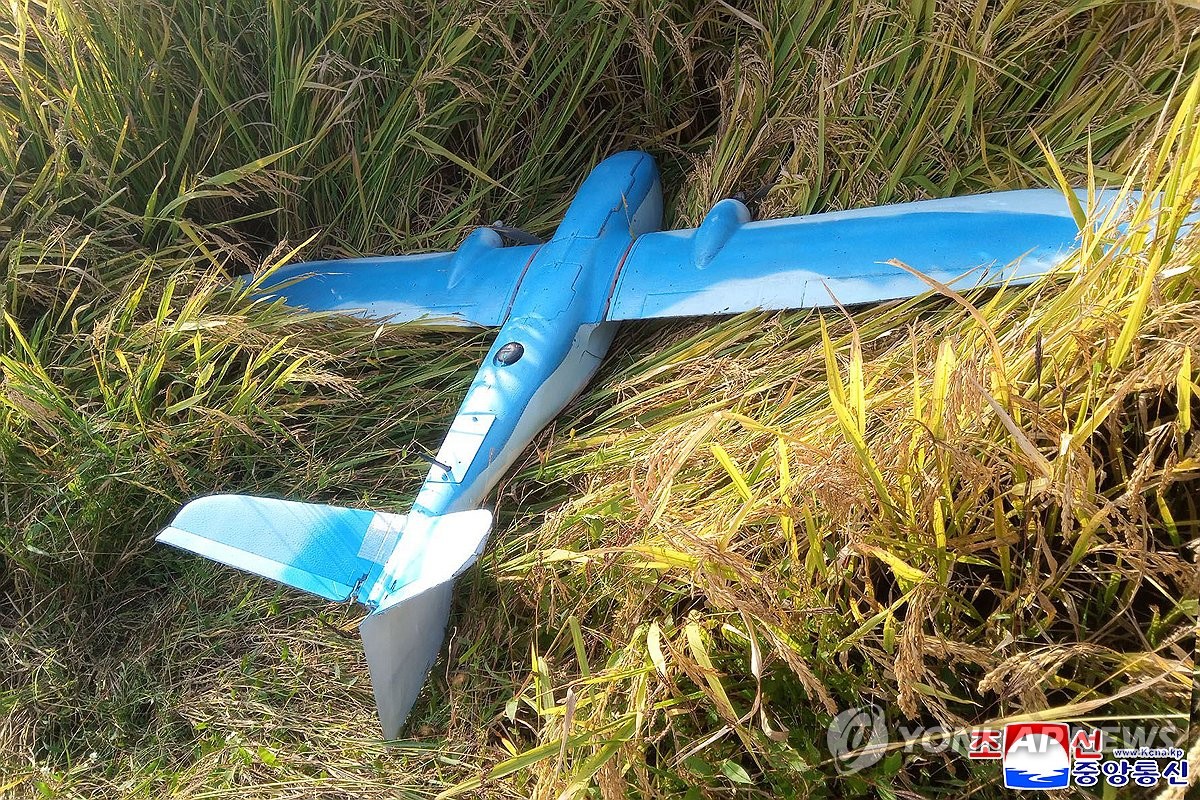
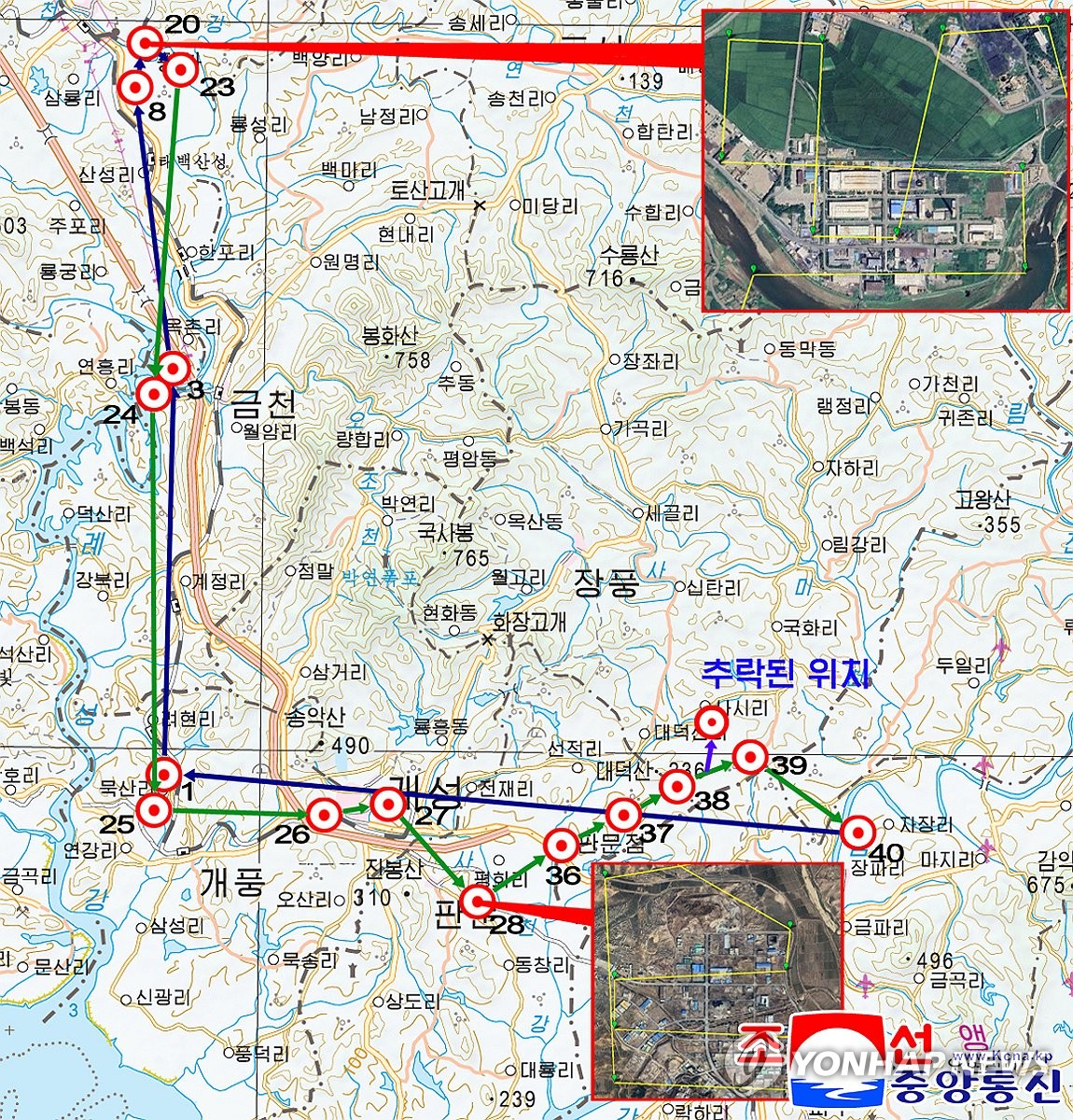
On January 10, 2026, North Korea's military published photos of a sky-blue drone in a field in Kaesong and said it had forced the aircraft down on January 4. It published the flight log too: launched from Ganghwa Island, south of the border, a grid pass over the Pyongsan uranium concentrate plant, then south past Kaesong and Panmun before the crash. A second drone had come down the same way in September 2025, launched from Paju. South Korea's defense minister said no military unit had flown on those dates, and experts who looked at the wreckage agreed: the airframe matches a Chinese hobby model (a Skywalker Titan 2160, roughly 1 million won, up to 4 hours and 260 km on paper) built from commercial parts anyone can buy.
The court later fixed the numbers: four flights between September 27, 2025 and January 4, 2026, two aircraft lost. The stated target, repeated in the flight plans, was the Pyongsan mill and the river below it. Kim Chung-shin, the group's North Korea specialist, had spent three years watching North Korean mines and smuggling on satellite images for a Unification Ministry affiliate, so he knew exactly what he was pointing a camera at.
Who they are
A note on names first: South Korean court reporting anonymizes defendants (you will see "Mr Oh" in the verdict stories), but these three put their own names on a company registry, university records and on-camera interviews long before any arrest, so we use them. Their startup was Estel Engineering, founded on September 22, 2023 in Sejong University's startup center.
- 016 months, suspended 2 years (aviation law only)Jang Han-yong (장한용)CEO (대표이사) · Airframe & Autopilot
- Sejong Univ. Aerospace Engineering (Class of 2015); Silver medalist at the 2016 Creative Aircraft Competition in the UAV club.
- Worked as a contract administrative staffer in the Yongsan Presidential Office under President Yoon Suk Yeol.
- Modified the 2-meter Chinese fixed-wing foam airframes and GPS flight controllers to fly low below border radar.
- 028 months, suspended 2 years (aviation law only)Oh Jong-taek (오종택, b. 1995)Internal & Sales Director (사내이사) · Operator
- Sejong Univ. Mechanical & Aerospace Engineering (Class of 2015); former president of conservative student group Korea University Students Forum (한국대학생포럼).
- Youth Advisor to Yoon Suk Yeol’s 2022 Transition Committee and contract staffer in the Yongsan Presidential Office (Public Relations).
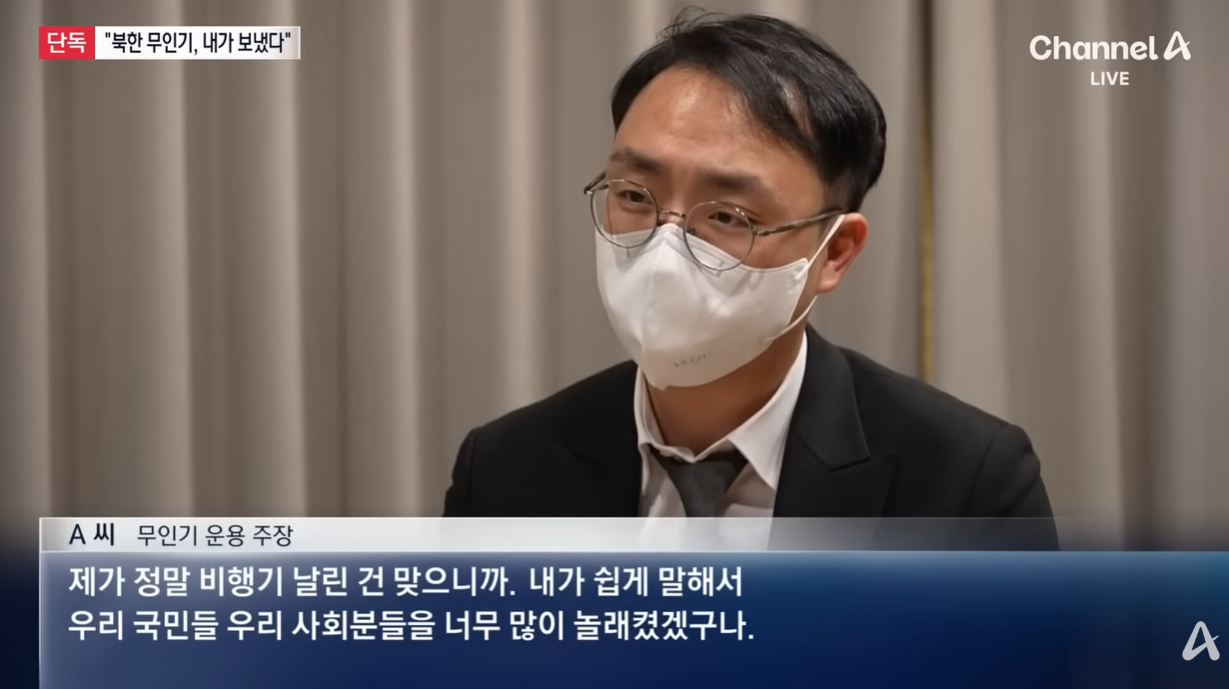
- Launched the four cross-border flights, registered the Defense Intelligence Command-funded outlets NK Monitor and Global Insight, and claimed responsibility on Channel A on Jan 16, 2026.
- 036 months, suspended 2 years (aviation law only)Kim Chung-shin (김충신, b. 1993)Director of North Korea Affairs (대북전문이사)
- Sejong Univ. Mechanical & Aerospace Engineering; frontline artilleryman in Goseong during the Aug 2015 DMZ artillery exchange; studied North Korean law in graduate school.
- Worked 3 years (from 2021) at the Ministry of Unification’s Inter-Korean Exchange and Cooperation Support Association tracking North Korean magnesite mining in Tanchon by satellite.
- Plotted the Pyongsan and Kaesong coordinates and told a visiting drone PhD that his goal was to film political prison camps (kwanliso) and push USBs and wireless internet in to end the dictatorship.
Read those three profiles together and the shape is kind of obvious. One guy could build the plane, one could fly it and work the politics, and one had spent years thinking about North Korea specifically. That combination is rare. It is also, as we will get to, part of why this ended in court.
What they actually wanted
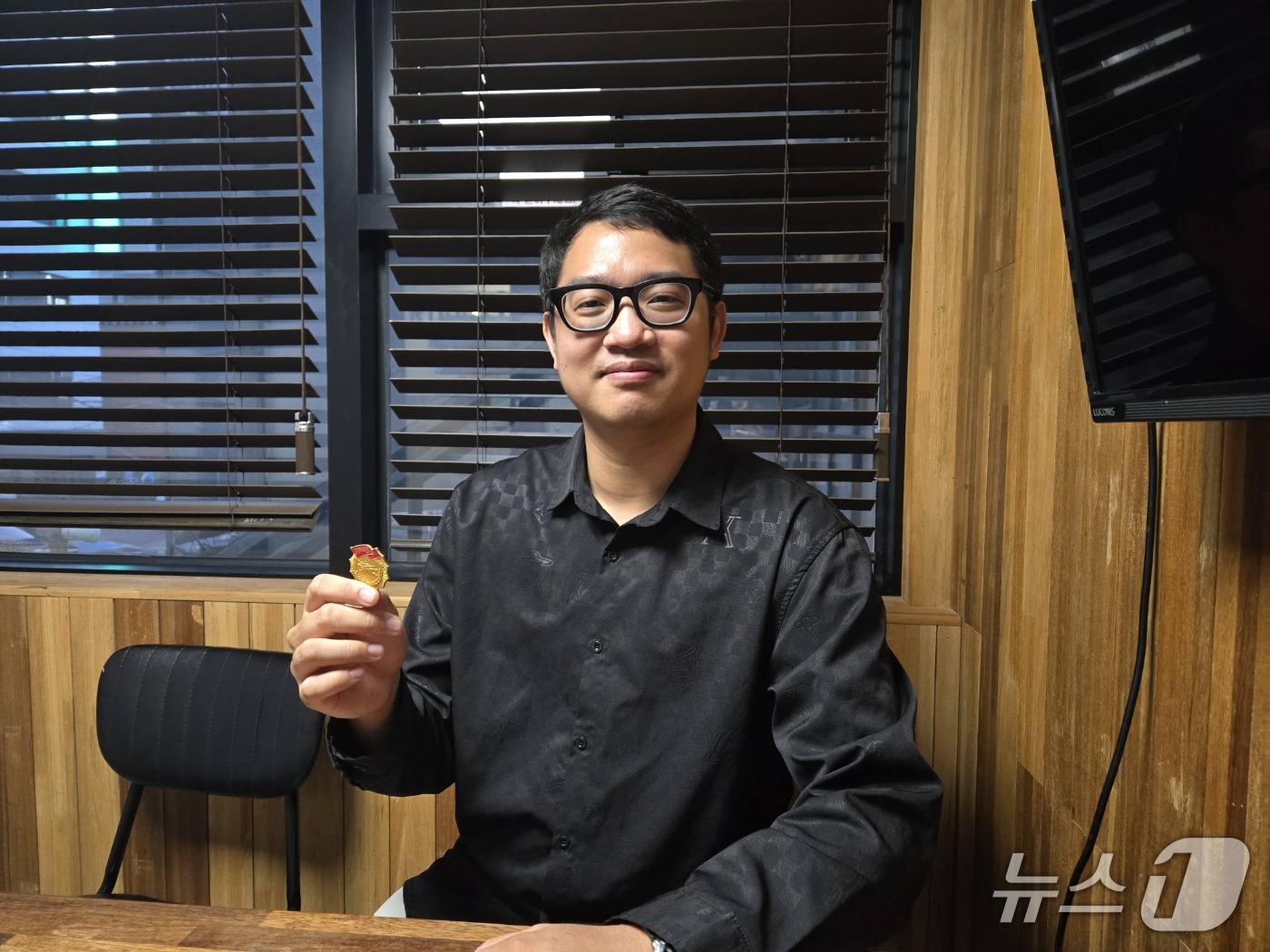
Kim Chung-shin had been saying the quiet part in public for years. In a June 2025 News1 profile he explained that he got into drones after North Korea's drones crossed Seoul in late 2022 ("I thought, we could do this better"), and that his real interest was information: current satellite dishes are too big to smuggle, he said, but antennas keep shrinking, and once satellite internet reaches ordinary phones without a dish, "a day can come when individuals in North Korea can also use the outside internet. I don't think it's a distant future at all." In a January 2025 podcast interview he went further: balloons drift, but a drone can put a router down in a chosen spot and come back. He added, in the same breath, that doing it could be severely punished and he had no intention of doing it. (He was right about the punishment part.)
Before any of that, in 2023 and 2024 he was presenting the same thesis at North Korea human rights and unification forums: the regime's censorship laws (the 2020 to 2023 laws that punish watching South Korean media with labor camps or death) prove that outside information is the thing it fears most, so the goal should be two-way communication, North Koreans talking back, not just leaflets falling out of the sky. Our explainer on how information gets into North Korea covers why that argument is mostly right: USB drives changed the country more than any broadcast.
What he said behind closed doors
The public interviews were careful. The private talk was not, and this is where a fourth person enters the story: a PhD-level drone specialist the group invited to their Sejong office in November 2025, after one of their aircraft crashed during a test flight in Yeoju. They wanted help building something that could fly longer. According to MBC's February 2, 2026 investigation, Kim showed the visitor aerial photos of the Pyongsan plant and GPS logs on his monitor, and said the goal plainly: "Our goal is to induce the end of the dictatorship by funneling outside information into North Korea via USBs or wireless communication." And: "What I want to film the most is the political prison camps."
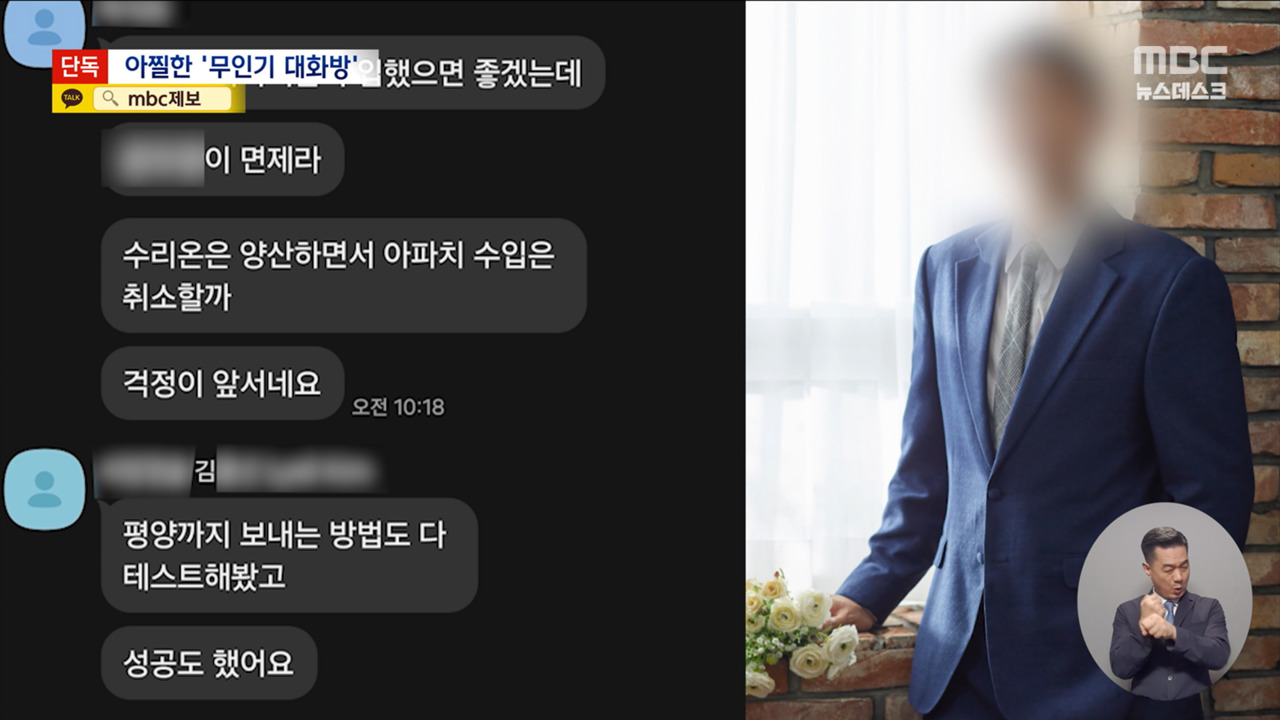
Two months later the drone came down in Kaesong, and Oh Jong-taek went on Channel A saying he had flown alone, out of curiosity about uranium wastewater. The specialist did not buy it. He spoke to MBC and filed a public-interest whistleblower report with the joint military-police task force, together with 21 months of a KakaoTalk group chat (May 2024 onward) in which Kim had been bragging to a wider circle of defense-minded friends: the plane flies about 140 km, "we tested the method to send it all the way to Pyongyang, and succeeded too," "even if we violate North and South Korean air defenses for nearly two hours, nobody knows," and, if Pyongyang held a night parade, they would go stir up Kim Il Sung Square and come back.
Was the specialist himself in that group chat? MBC never said, and whistleblower law keeps him anonymous (the report was filed through a lawyer). But the chat screenshots MBC aired show Kim's messages from a viewer's side of the conversation, and the logs and the office testimony arrived together, so he was at minimum filing alongside someone who had sat in that room for 21 months. Either way, his statement killed the wastewater story. What he described was not a hobby flight. It was a years-long project to photograph sensitive sites, film camps, and eventually push information in.
The intelligence money
Then it got messier. Investigators found that officers from South Korea's Defense Intelligence Command had been in contact with the group since around July 2024, received their North Korea footage, recruited Oh as a civilian collaborator, and paid roughly 13 million won (about $9,500) in activity funds through two online news outlets the men registered in April 2025, NK Monitor and Global Insight. Both sites are now dark. The command said the money was for running the camouflage media outlets.
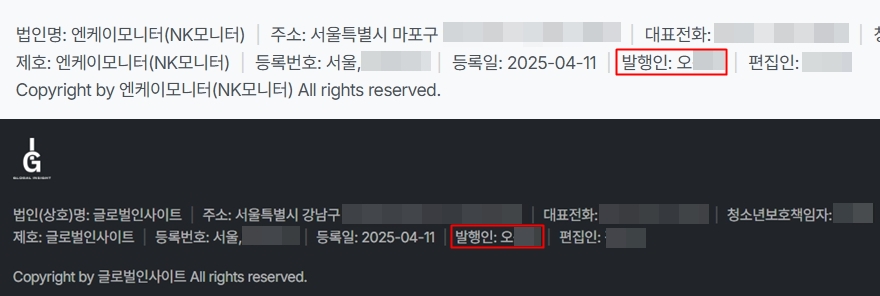
So the same state that prosecuted them had also, through one of its intelligence arms, quietly fed them money and taken their photos. Hold that thought, because it is the part of this story I keep coming back to.
What the court actually decided
- Estel Engineering foundedSejong University startup center, the same month South Korea stood up its Drone Operations Command.
- The group chat opensKim shares drone progress and Pyongyang talk with a wider circle. The log later reaches investigators.
- Intelligence contactDefense Intelligence Command officers receive footage, recruit Oh, and fund the group through two news sites (alleged in the investigation, reported by MBC and others).
- Four flightsGanghwa and Paju launches over Kaesong and Pyongsan. Two drones crash inside North Korea.
- North Korea publishes the wreckFlight logs, photos, threats. Seoul denies any military flight.
- The wastewater storyOh tells Channel A he flew alone to check uranium pollution. The whistleblower report lands the same month.
- MBC airs the chat logsThe prison camp quote and the Pyongyang boasts become public.
- VerdictAviation Safety Act: guilty, suspended sentences. General Benefiting of the Enemy: not guilty.
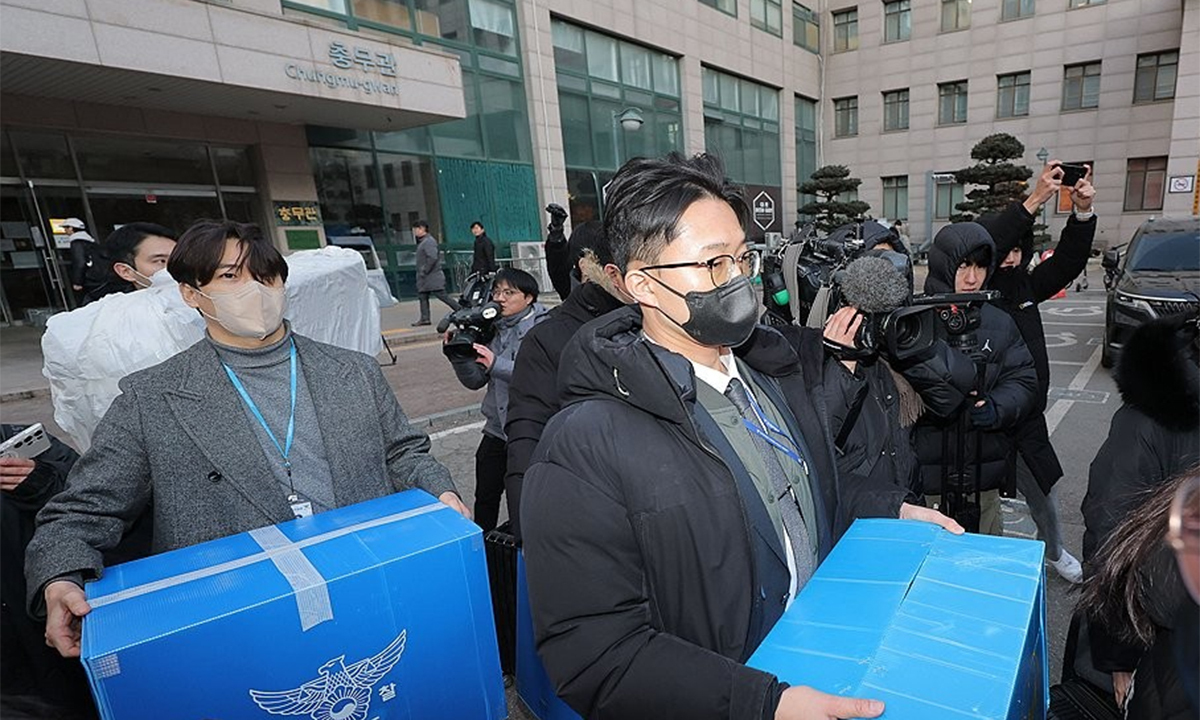
Prosecutors charged all three with General Benefiting of the Enemy (Article 99 of the Criminal Act), arguing that the flights exposed South Korea's air-defense gaps and handed Pyongyang a pretext, and asked for 5 years for Oh and 3 years each for Jang and Kim. On September 16, 2026, the Seoul Central District Court refused that framing. It found the aviation charge proven (the drone, with camera gear, was over the 2 kg reporting line and not a university research exemption) and gave Oh 8 months and the other two 6 months each, all suspended for 2 years. On the enemy-benefiting charge it said not proven: it was never established that the drone even carried an SD card, North Korea's published photos show none, so the court would not assume that useful military information (routes, altitudes, flight profiles) had leaked, and giving the North a propaganda pretext does not by itself prove harm to South Korea's military interests. One of the three judges would have convicted on that charge too. Oh, who had been held, walked out that day.
Would Starlink even work in North Korea?
Kim's endgame was never the flights themselves. It was connectivity: routers and satellite internet dropped deep inside the country. So, honestly, would a Starlink terminal work if one landed outside a prison camp tomorrow? No. And the reasons are worth listing, because none of them are laws of physics.
The geofence
Starlink serves approved hexagonal cells, roughly 15 to 22 km across. A terminal checks its own GPS position and only gets a beam if its cell is switched on. Every cell over North Korea is off (US sanctions, no spectrum license), so a smuggled Starlink Mini inside the country stays a brick, apart from a thin bleed along the DMZ and the coast where South Korean and maritime cells overlap. SpaceX has flipped coverage on over a whole country in days when politics allowed it (Ukraine, February 2022), and refused where sanctions stood in the way (Crimea). Switching on North Korea is a decision in Washington, not a technical limit.
The ground
Even switched on, a dish needs open sky, 20 to 40 watts all day (solar panels, batteries, in a country where power is rationed), and it transmits. North Korea's radio surveillance units already hunt Chinese mobile phones near the border with direction finders; a Ku-band uplink is much louder than a phone. And Kim's bigger bet, satellite direct to ordinary phones, runs into the phones themselves: North Korean smartphones are locked to the state intranet at the system level. The connection has to arrive on hardware people can actually use, which still means smuggled foreign phones.
None of that makes the idea stupid. It makes it early. The direction is right: every serious account of change inside North Korea runs through information getting in and, eventually, North Koreans being able to answer back. A USB stick cannot answer back. A connected phone can. What is missing is not imagination, it is permission: a US sanctions license and a SpaceX switch, prepared before a crisis instead of improvised during one, plus terminals and phones designed to be small, quiet and cheap on power. That is buildable. Somebody should be building it.
Understandable, and still unfortunate
I get why Seoul prosecuted. You cannot have civilians flying unannounced through one of the most sensitive air-defense zones on earth, on a route over a uranium plant, while an intelligence unit secretly pays them through fake news sites. If a drone had come down on a parade, or the North had answered with artillery the way it has before, the same people now calling the prosecution cowardly would ask why nobody stopped them. The aviation conviction, a suspended sentence for flying an unreported drone across the MDL, seems fair enough to me.
But look at the whole picture and it is hard to feel good about it. In 2025 the US cut Radio Free Asia's Korean service and South Korea's government ended its own broadcasts and leaned on balloon activists to stop. The loud, official channels into North Korea mostly went quiet. And in that same period, probably the most technically serious civilian attempt anyone has made to document the camps and break the information blockade was being run by three graduates out of a university startup room, partly with intelligence money nobody would own up to. The state funded them in secret, then charged them with helping the enemy, then lost that charge in court. That is not a strategy. That is a government that does not know what it thinks.
What would better look like? Deliberate, with lines drawn in the open. A government that says: documenting prison camps and getting information to North Koreans is a national goal, here is the legal path for civilian groups to do it, here is what stays off limits (no flights timed to parades, nothing that risks a firefight), and we will quietly look the other way on the small stuff that endangers nobody. Or, if Seoul judges the risks too high, say that too, plainly, and fund the safe channels properly instead of cutting them. The worst option is the current one: rhetorical commitment, shrinking budgets, rogue handlers, and prosecutions after the fact.
And some of this should not wait for governments at all. Civilians doing this work can move faster, try weirder technology, and operate in the open as citizens exercising free speech rather than as state assets, which also makes them safer to defend when a court case comes. Kim Chung-shin was wrong about a lot of the execution (the bragging, the intelligence money, the flights nobody coordinated). I don't think he was wrong about the main thing. Twenty-six million people live inside an information blackout that the regime defends with labor camps and death sentences. Somebody outside has to keep pushing on that wall, carefully, and the people who try deserve a state that knows whether it is behind them or not.
And Seoul is not the only government that could move an inch here. The US could too, and its step is weirdly small. What stands between a North Korean and the outside internet right now is not physics. It is a sanctions license sitting in Washington and a coverage switch at SpaceX (or at whoever gets there next: Amazon's Kuiper, the direct-to-cell services, whoever). One general license, the kind the US has written before when it wanted information to flow into a closed country, plus the provider agreeing to light up the cells over North Korea, and a smuggled phone or a small terminal stops being a brick. It does not have to be dramatic, nobody has to announce anything on TV. Just make it legal and make it work, quietly and before a crisis, so that when a device does get inside, it connects. If Washington wants North Koreans to hear anything other than their own government, that is probably the cheapest step it could take.
- Four civilian drone flights over Kaesong and the Pyongsan uranium mill (Sep 2025 to Jan 2026) were the work of three Sejong University graduates at Estel Engineering, one of whom openly wanted to film the prison camps and push outside information in.
- A PhD specialist they asked for help, plus 21 months of group chat logs, blew up their "curiosity" cover story; intelligence officers had quietly funded them with about 13 million won through two news sites.
- In September 2026 the court gave suspended sentences for flying an unreported drone, and acquitted them of benefiting the enemy. Starlink would not work in North Korea today (geofence, power, surveillance, locked phones), but switching it on is a policy choice, and preparing that choice is overdue.
Quick answers
- Who flew the drones into North Korea in 2025 and 2026?
- Three Sejong University aerospace graduates behind the startup Estel Engineering: Jang Han-yong (CEO, airframes), Oh Jong-taek (operator, who claimed responsibility on Channel A) and Kim Chung-shin (North Korea affairs, targets and routes). South Korean court reporting anonymizes them as Mr Jang, Mr Oh and Mr Kim; their names are on the company registry and in interviews they gave under their own names.
- What were they convicted of?
- On September 16, 2026 the Seoul Central District Court convicted all three under the Aviation Safety Act for flying an unreported drone over the military demarcation line (Oh Jong-taek 8 months, Jang Han-yong and Kim Chung-shin 6 months each, all suspended for 2 years). It acquitted them of General Benefiting of the Enemy, finding it unproven that the drone carried an SD card or that useful military information reached North Korea.
- Did they want to free North Korea?
- Kim Chung-shin said so repeatedly, in public interviews and, according to a whistleblower who reported the conversation to investigators and MBC, in private: the goal was to push outside information in by USB and wireless links to bring about the end of the dictatorship, and the thing he most wanted to film was the political prison camps. The group also bragged in a KakaoTalk chat about reaching Pyongyang and Kim Il Sung Square, and took about 13 million won from Defense Intelligence Command officers through two news websites.
- Would a Starlink terminal work inside North Korea?
- Not today. Starlink only serves switched-on coverage cells, and all cells over North Korea are off under US sanctions and licensing rules, so a terminal there cannot connect except in a thin overlap near the DMZ and coast. Even if SpaceX enabled coverage (a US policy decision, as with Ukraine in 2022), a terminal needs open sky and 20 to 40 watts, transmits in Ku-band where North Korean radio surveillance can hunt it, and North Korean phones are locked to the state intranet, so direct-to-cell satellite internet would still need smuggled foreign phones.
- How did investigators find out?
- North Korea published the downed drone and its flight log on January 10, 2026, and police traced the parts and the university office. A PhD-level drone specialist the group had invited in for help in November 2025 then filed a public-interest whistleblower report describing Kim showing him Pyongsan photos and stating the prison camp goal, together with 21 months of the group KakaoTalk chat, which MBC aired on February 2, 2026.
Fund a rescue, send information in, or support the people documenting abuses. Takes about ten minutes to start.
See what you can doSources
- OhmyNews (Feb 3, 2026): the KakaoTalk logs, the PhD specialist, and the intelligence money, summarizing MBCohmynews.com ↗
- Yonhap (Jan 10, 2026): North Korea publishes the downed drone and flight log; Seoul denies a military flightyna.co.kr ↗
- News1 (Sep 16, 2026): verdict, suspended sentences, benefiting-the-enemy acquittal and the court reasoningnews1.kr ↗
- SBS News (Sep 16, 2026): acquittal reasoning, no proven SD card, prosecutors had sought 5 and 3 yearsnews.sbs.co.kr ↗
- News1 profile of Kim Chung-shin (June 7, 2025, Daum mirror): drones, collecting, and satellite internet quotesv.daum.net ↗
- MBC News (Feb 2, 2026, Naver): the group chat and the prison camp quoten.news.naver.com ↗
- Wikipedia: Starlink in the Russo-Ukrainian War (coverage switched on and geofenced by policy, incl. Crimea)en.wikipedia.org ↗

Keep reading
 How can North Korea be freed?Five ways the regime could end or open up, roughly how likely each one is, and which ones normal people can actually push on.8 min read
 Is it possible to free North Korea?Why the regime has lasted since 1948, the cracks that are already there, and what history says about "permanent" dictatorships.6 min read
 How to help North Korean peopleConcrete things that work, with costs. Rescues, USB drives, tutoring escapees, documentation, and pressure on governments.6 min read